
The transformation team was discussing incentives. A new technology would require tens of thousands of employees to change how they worked. There were suggestions of rewards and competitions. Lindsey Caplan thought the conversation had moved too far ahead.
In our conversation, she recalled asking the team to stop. Employee focus groups had already surfaced a concern: people resisted when change was being done to them rather than with them. Now the team was considering more ways to push.
Caplan went to the whiteboard and drew four quadrants. Before deciding how to incentivize adoption, she wanted the team to settle a question: did this change call for compliance or engagement? Was the goal for employees to comply with a new requirement, or to become active participants in making the change work?
Both can be legitimate goals. But they require different approaches. If the organization wanted employees to take ownership of the change, would another set of incentives get them there?
Once they chose engagement, she said, decisions became easier. They had something to work from when considering change champions, employee involvement, and how to present the technology.
Four different effects
Caplan began as a Hollywood screenwriter, then worked in learning and development and studied organizational psychology. Her forthcoming book, Moved: The Art and Science of What Moves Us & How to Move Others, asks what gets groups to care, participate, and act.
The Moved Model identifies four effects we can create in groups: compliance, informing, entertaining, and engaging. They each emerge from two dimensions of influence: Push versus Pull, and One-Size-Fits-All versus Personalized.
Push directs people toward a response; Pull invites them to participate. One-Size-Fits-All approaches could be directed at anyone, while Personalized approaches connect with the particular people involved. The model helps leaders examine whether the way they're approaching a group makes the response and the behavior they want more or less likely.
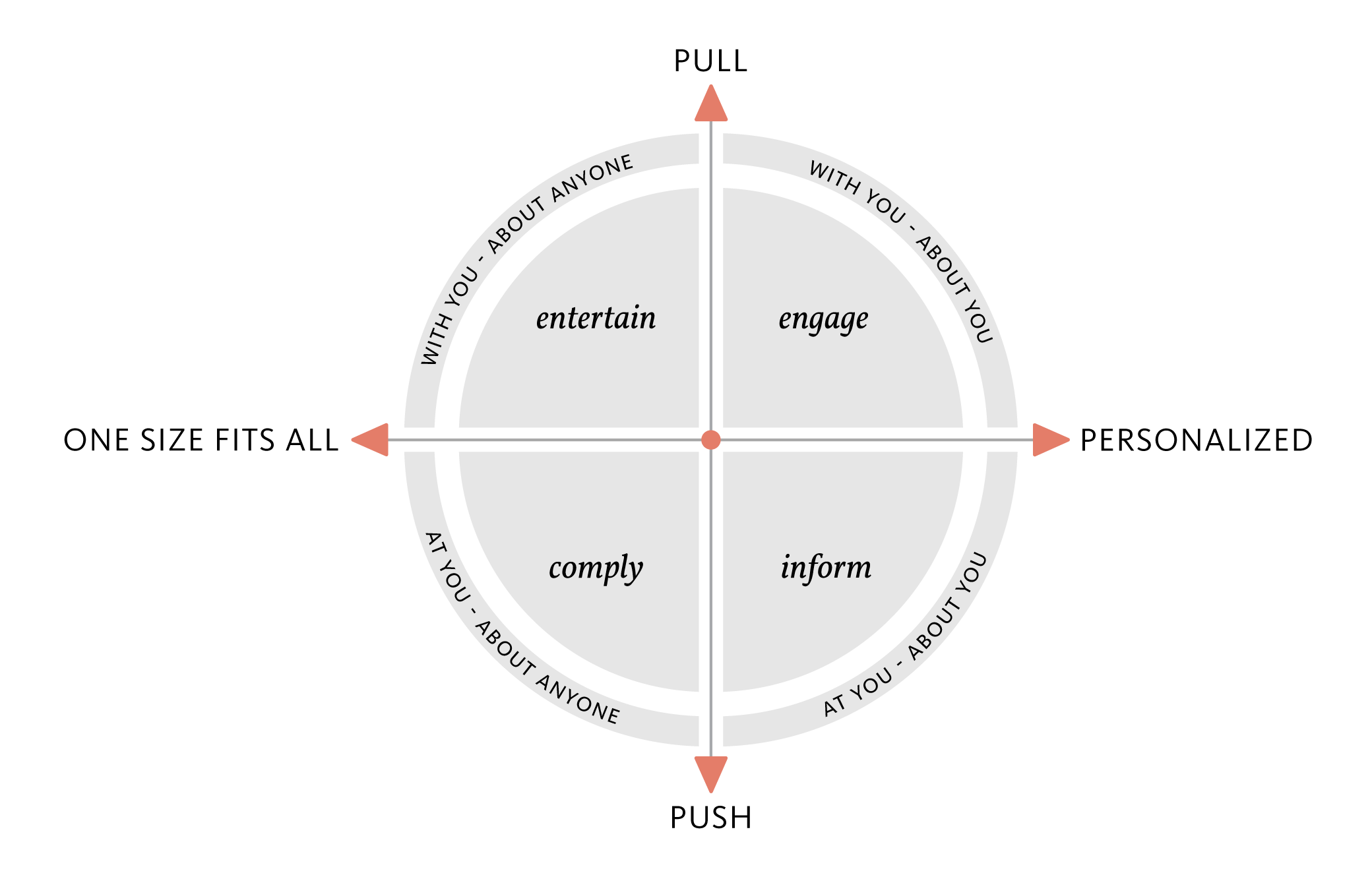
In her August newsletter, Caplan applied the model to AI adoption. A mandate may produce compliance. Training may inform. A demonstration may entertain. Engagement, however, is about what happens next: whether people begin experimenting, finding applications in their own work, and sharing what they discover without being continually pushed.
The distinction isn’t that one effect is always better than another. An AI rollout may require mandatory rules alongside opportunities for employees to experiment. The important question is whether the approach matches the response the organization needs.
In her work with executives, Caplan sees leaders asking for lasting commitment and ownership while communicating in ways that ask people to fall into line. They already understand the decision and agree with it. Employees are starting somewhere different.
“I told them, and why didn't they get it?” is how she described the frustration.
She described her Moved Model’s value as a shared language: a way to discuss what isn’t working without making it personal. Rather than simply asking whether a message was clear or compelling, teams can ask whether they are creating the conditions for the response and behavior they actually want.
Who could people become?
The technology would replace some of the ways people did their jobs. A presentation of features could show what the technology did while leaving people unsure of their own place alongside it.
“Who could they become now with this technology?” Caplan asked.
How could their work change? What new opportunities might they have?
The communication explored how their work could look six months ahead, helping employees see themselves in the change.
This was a shift from explaining the technology to helping people imagine what it could make possible for them. Rather than treating employees as an audience for the change, it gave them a way to picture their own future within it. The point was to design for participation and ownership, rather than assume employees would follow from a well-delivered announcement.
When we spoke, the rollout was still underway.
Working with the executive
Caplan is careful about the pressure leaders are under. An executive pushing for adoption may be responding to a board or stakeholders demanding progress.
“When we feel pushed, we tend to want to push others,” she said. It’s often our default approach.
Caplan suggests finding out what matters to the executive and involving them in working through the problem.
Rather than immediately changing the communication plan, internal communicators can help leaders clarify the effect they’re trying to create and whether their current approach is likely to produce it.
Before the next adoption announcement, you could work through these questions together:
- What do employees need to do because it’s required, and where do they have room to choose?
- What do they need to understand, and what might they need to experience for themselves?
- Where are we asking people to follow instructions, and where do we want them to take ownership?
- How can we give employees a meaningful role in shaping what happens next?
These questions shift the conversation from what leaders want to tell people to what they want people to do, feel, or change—and what role employees can play in getting there.
Before the next change announcement, ask: what kind of response are we trying to create? And are we designing for that response, or simply hoping it will happen?
About Lindsey Caplan
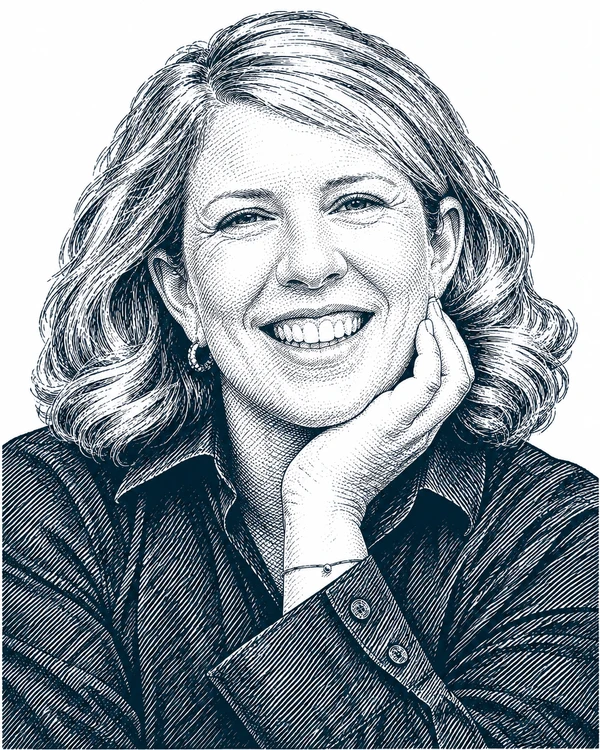
Lindsey Caplan is a former screenwriter turned organizational psychologist, and author of Moved: The Art and Science of What Moves Us & How to Move Others, publishing March 9, 2027, from Amplify Publishing Group.
She’s a sought-after speaker and advisor whose work explores what moves groups emotionally and behaviorally.
She holds a master’s degree in organizational psychology from Teachers College, Columbia University, and a bachelor’s degree in communication and creative writing for the media from Northwestern University.
The book is available for pre-order. You can also visit Lindsey’s website or connect with her on LinkedIn.